
Human perception has always been limited by our biological senses, but emerging technologies are breaking these boundaries, offering unprecedented ways to experience and interact with the world around us.

🧠 The Evolution of Human Perception Through Technology
For millennia, humans have relied on five primary senses to navigate their environment: sight, hearing, touch, taste, and smell. These biological sensors have served us well, enabling survival, communication, and the creation of complex civilizations. However, our natural sensory apparatus captures only a fraction of the information available in our surroundings. We cannot see ultraviolet light like bees, detect magnetic fields like birds, or hear ultrasonic frequencies like dolphins.
Today, augmented reality and sensory enhancement technologies are fundamentally changing this equation. We’re entering an era where human perception can be extended, modified, and enhanced through technological integration. This transformation isn’t just about seeing digital overlays on physical spaces—it’s about fundamentally expanding what it means to be human and how we experience reality itself.
The concept of augmented senses goes far beyond traditional AR headsets displaying Pokemon characters in your living room. It encompasses a spectrum of technologies designed to either enhance existing senses or create entirely new sensory channels. From cochlear implants that restore hearing to haptic feedback systems that allow users to “feel” digital information, we’re witnessing a revolution in human-machine integration.
🔬 Current Technologies Expanding Sensory Boundaries
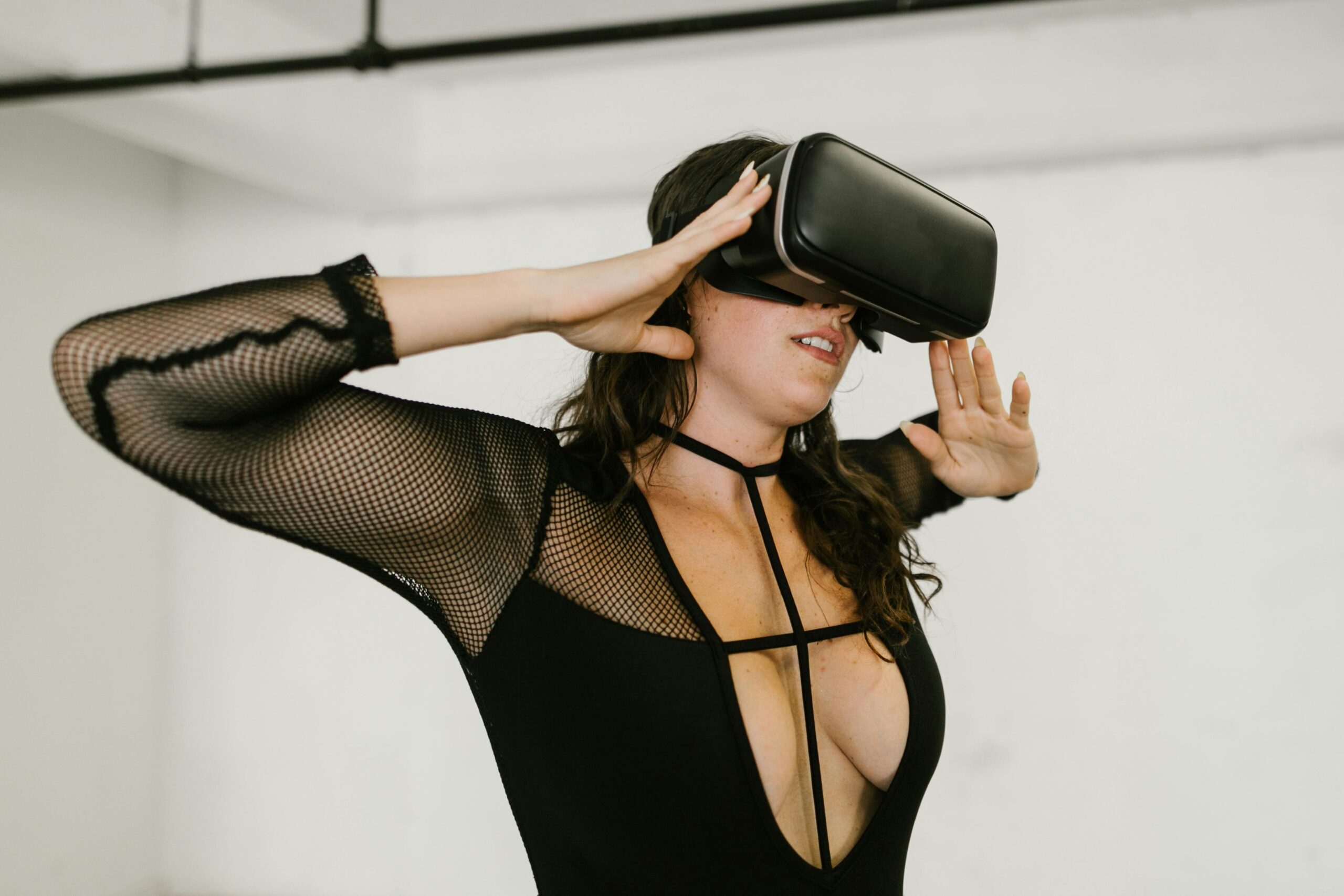
The landscape of sensory augmentation is diverse and rapidly evolving. Several categories of technology are already making significant impacts on how humans perceive their environment. Visual augmentation leads the charge, with smart glasses and AR headsets becoming increasingly sophisticated. These devices can overlay navigation information, translate foreign text in real-time, and even highlight potential hazards in industrial settings.
Auditory enhancement has progressed beyond simple hearing aids. Modern cochlear implants can restore hearing to the profoundly deaf, while bone conduction technology allows users to receive audio information without blocking their ear canals. Some experimental systems even enable users to “hear” through their skin using tactile patterns that the brain learns to interpret as sound.
Haptic Feedback Systems Transforming Touch
Touch is perhaps the most intimate of our senses, and haptic technology is making it possible to feel things that don’t physically exist. Advanced haptic gloves can simulate the texture and resistance of virtual objects with remarkable fidelity. Surgeons use these systems for remote operations, allowing them to “feel” tissues through robotic instruments from thousands of miles away.
Wearable haptic devices are also being developed to provide directional navigation through vibration patterns. Users can navigate complex environments without looking at screens, receiving gentle pulses that guide them toward their destination. This technology proves particularly valuable for visually impaired individuals, offering a new channel for spatial awareness.
👁️ Visual Enhancement: Seeing Beyond the Visible Spectrum
Our eyes are limited to detecting electromagnetic radiation within a narrow band called visible light. However, thermal imaging technology allows us to visualize infrared radiation, revealing heat signatures invisible to the naked eye. When integrated into wearable formats, these systems give users superhuman vision capabilities.
Night vision technology has advanced dramatically from the bulky military equipment of decades past. Modern devices are compact enough to integrate into glasses or contact lens-like displays. Some experimental systems combine multiple imaging modes, allowing users to switch between normal vision, thermal imaging, and edge-enhanced views optimized for specific tasks.
Augmented reality contact lenses represent the cutting edge of visual enhancement research. Companies are developing lenses with embedded micro-displays that can project information directly onto the retina. Unlike AR glasses, these devices are virtually invisible, promising a future where enhanced vision becomes as natural as wearing corrective lenses today.
Color Perception and Beyond
Some individuals are born with color blindness, limiting their ability to distinguish certain hues. Digital glasses can now correct this deficiency in real-time, shifting wavelengths into ranges the wearer can perceive. Users often describe emotional experiences when seeing true colors for the first time, highlighting how profoundly our sensory experience shapes our relationship with the world.
But why stop at correcting deficiencies? Some researchers are exploring ways to expand human color perception beyond normal trichromatic vision. By mapping invisible wavelengths like ultraviolet or infrared to visible colors, humans could potentially perceive a richer color palette than nature originally provided.
🎧 Auditory Augmentation: Hearing the Unhearable
Sound exists far beyond the range of human hearing, which typically spans from 20 Hz to 20,000 Hz. Many animals communicate and navigate using frequencies we cannot detect. Ultrasonic sensors can convert these high-frequency sounds into audible ranges, potentially allowing humans to “hear” bat echolocation or the ultrasonic calls of rodents.
Directional hearing represents another frontier. While humans can generally localize sound sources, our spatial audio resolution is limited compared to animals like owls. Advanced audio processing systems can enhance our ability to pinpoint sound locations with greater precision, valuable in search-and-rescue operations or military applications.
Selective hearing enhancement allows users to focus on specific audio sources while filtering out background noise. This technology proves particularly valuable in loud environments like factories, restaurants, or crowded streets. Modern hearing devices use artificial intelligence to identify and amplify desired sounds like conversation while suppressing ambient noise.
Synesthetic Experiences Through Cross-Modal Translation
Some fascinating applications involve translating one sense into another. Devices have been created that convert visual information into auditory patterns, enabling blind individuals to “see” through sound. The brain’s remarkable plasticity allows users to learn these new sensory languages, eventually perceiving them as naturally as native senses.
Similarly, some systems convert sound into visual patterns or tactile sensations. Deaf individuals can experience music through vibration vests that translate different frequencies and rhythms into patterns of touch across their body. These technologies demonstrate that human perception is more flexible than we once believed.
🌐 Proprioception and Balance: Sensing Body Position Enhanced
Proprioception—our sense of body position and movement—operates largely unconsciously. We know where our limbs are without looking, and we maintain balance through complex integration of visual, vestibular, and proprioceptive information. Technology is now enhancing these fundamental senses in surprising ways.
Balance augmentation systems use subtle electrical stimulation or vibrotactile feedback to help users maintain stability. These devices prove particularly valuable for elderly individuals at risk of falls or for astronauts adjusting to zero-gravity environments where normal balance cues disappear.
Motion capture and feedback systems can enhance athletic performance by providing real-time information about body position and movement efficiency. Sensors detect subtle deviations from optimal form, alerting users through haptic feedback before poor technique becomes ingrained habit.
💫 Creating Entirely New Senses
Perhaps the most fascinating frontier involves creating sensory experiences that have no biological equivalent. Some researchers have developed devices that allow humans to sense magnetic fields, similar to migratory birds. A small implant or external device vibrates when oriented toward magnetic north, and after extended use, wearers report developing an intuitive sense of direction they never possessed before.
Researchers have also experimented with giving humans echolocation abilities similar to bats and dolphins. By clicking their tongues and listening to the echoes through specialized headphones that amplify and clarify returning sounds, trained individuals can navigate environments and detect objects in complete darkness.
Some scientists are exploring “electrosense”—the ability to detect electrical fields as some fish do. While still experimental, these systems could eventually allow humans to sense electronic devices, power lines, or even the subtle electrical patterns produced by living organisms.
Data Visualization as a New Sense
In our information-saturated world, some argue that we’re developing an entirely new category of perception: the ability to sense and interpret abstract data streams. When you check your phone for weather, stock prices, or social media notifications, you’re extending your senses into domains that have no physical manifestation.
Wearable devices that provide continuous biometric feedback—heart rate, blood oxygen, stress levels—are teaching users to become more aware of their internal states. This enhanced interoception allows people to recognize patterns and respond to their body’s signals more effectively than ever before.
🚀 Implications for Human Potential and Society
The enhancement of human senses carries profound implications that extend far beyond individual capabilities. In education, students with enhanced perception could learn more efficiently by receiving information through optimized sensory channels. Visual learners might benefit from systems that convert abstract concepts into visual representations, while kinesthetic learners could experience information through touch and movement.
Professional applications abound across industries. Surgeons with enhanced vision and touch could perform more precise procedures. Architects and engineers could visualize structural stress and material properties overlaid on physical objects. Artists could work with expanded color palettes or create multisensory experiences previously impossible.
Emergency responders could navigate dangerous environments with thermal vision, toxic gas sensors rendered as visual overlays, and enhanced hearing to locate trapped individuals. The potential to save lives through sensory augmentation provides compelling justification for continued development.
Accessibility and Inclusion
For individuals with sensory impairments, these technologies offer transformative possibilities. The deaf can experience sound through alternative channels. The blind can navigate independently with spatial awareness derived from sonar or tactile displays. What begins as assistive technology for those with disabilities often becomes enhancement for everyone, following the pattern of many technologies throughout history.
However, questions of access and equity arise. If sensory enhancement becomes expensive or restricted, it could create new categories of privilege and disadvantage. Ensuring these technologies remain accessible regardless of economic status will be crucial to preventing a society divided between the enhanced and unenhanced.
⚠️ Ethical Considerations and Challenges
As with any transformative technology, sensory augmentation raises important ethical questions. Issues of privacy become more complex when individuals can record or share their enhanced perceptions. If your AR glasses constantly record everything you see, what happens to the privacy of those around you?
Cognitive load represents another concern. Humans evolved to process a specific amount and type of sensory information. Adding new sensory streams or dramatically increasing information density could overwhelm cognitive resources, potentially causing stress, distraction, or decision paralysis.
There’s also the question of authenticity and experience. If we increasingly perceive reality through technological mediation, do we risk losing something essential about direct, unaugmented experience? Some philosophers argue for the value of “naked perception,” suggesting that constant augmentation might distance us from genuine connection with the physical world.
Security and Vulnerability
Devices that interface directly with our senses create new vulnerabilities. Hacked AR systems could display false information indistinguishable from reality. Manipulated haptic feedback could cause physical accidents. As we integrate technology more intimately with our perception, cybersecurity becomes literally a matter of protecting how we experience reality.
Dependency presents another risk. As people come to rely on enhanced senses, what happens when the technology fails or is unavailable? Will we maintain the ability to function with our natural, unaugmented senses, or will enhancement become a necessity rather than an option?
🔮 The Future of Human Perception
Looking forward, the trajectory of sensory enhancement technology suggests increasingly seamless integration with human biology. Brain-computer interfaces may eventually bypass external sense organs entirely, feeding information directly into neural processing centers. Such systems could theoretically provide any sensory experience that can be computationally generated.
Collective perception represents an intriguing possibility. If multiple individuals share enhanced sensory data in real-time, they could develop forms of distributed awareness, experiencing aspects of each other’s perceptions. This could foster unprecedented empathy and cooperation, though it also raises questions about individuality and mental boundaries.
The line between therapy, enhancement, and radical transformation will continue to blur. Today’s experimental systems will become tomorrow’s consumer products, eventually reaching ubiquity similar to smartphones. Each generation will likely view sensory capabilities differently, with enhanced perception becoming normalized and expected.
🎯 Preparing for an Enhanced Future
As these technologies mature and proliferate, society must thoughtfully address their integration. Education systems should prepare individuals to use enhanced senses effectively and responsibly. Regulatory frameworks need development to address safety, privacy, and equity concerns without stifling beneficial innovation.
Research into the psychological and neurological effects of sensory augmentation should continue. We need to understand how the brain adapts to new sensory channels, what the long-term effects might be, and how to optimize human-technology integration for wellbeing rather than merely capability.
Public dialogue about these technologies should involve diverse perspectives including ethicists, technologists, users, and those who choose not to adopt enhancements. The future of human perception shouldn’t be determined solely by what’s technically possible but by collective wisdom about what serves human flourishing.
🌟 Embracing Expanded Horizons
The enhancement of human senses represents one of the most profound transformations in our species’ history. For the first time, we’re not merely adapting to our sensory environment but actively reshaping what and how we perceive. This power comes with both tremendous opportunity and significant responsibility.
The possibilities extend beyond practical applications into the realm of experience itself. Imagine perceiving the electromagnetic spectrum as naturally as you currently see light, feeling data flows as tangibly as texture, or sharing sensory experiences with others across distances. These aren’t science fiction fantasies but emerging realities being developed in laboratories worldwide.
Yet the most important consideration may be preserving what makes us human while expanding our capabilities. Enhancement should serve human values, relationships, and wellbeing rather than becoming an end in itself. Technology works best when it amplifies our humanity rather than replacing it.
As we stand at this threshold, the choices we make about sensory enhancement will shape not only individual lives but the future trajectory of human evolution. By approaching these technologies with wisdom, ethics, and inclusive vision, we can create a future where enhanced perception enriches the human experience for everyone, opening new dimensions of understanding, connection, and wonder that previous generations could never have imagined. The journey toward limitless perception has begun, and its destination remains wonderfully uncertain.